


Bringing your dog to patio drinks can be an afternoon, or a furry administrative hearing. This national guide covers how to choose a dog-friendly patio, pack water and shade, practice flawless etiquette, and recognize when your pup has had enough. Because a day drinking companion should leave hydrated and welcome.
Reading Time: 7 minutes, shorter than the wait for a patio table.
There are two kinds of people at a dog-friendly patio: the person whose dog is calmly snoozing under the table, and the person whose dog has just attempted to join a stranger’s birthday brunch.
Let’s aim for the first one.
Day drinking with your dog can be a fantastic way to turn a regular afternoon into an actual memory. You get sunshine, patio drinks, people-watching, and the company of a creature who has never once pretended to understand cryptocurrency. Your dog gets fresh air, new smells, and quality time with their favorite human.
But a patio is not a dog park with cocktails. It is a shared social space with servers carrying hot plates, guests who may not want a surprise nose inspection, and glassware that should remain dramatically unshattered.
Here’s how to make the whole outing enjoyable, safe, and welcome from the first sip to the final tail wag.

First, Pick the Right Patio
“Dog-friendly” should mean more than a restaurant allowing your dog to exist within a 12-foot radius of the building.
Before heading out, check the venue’s website or call ahead. Rules vary by state, city, county, and individual business. Some patios allow dogs only during certain hours. Others have separate entrances, designated seating areas, size restrictions, or rules about where pets can settle.
The National Restaurant Association’s patio guidance notes that local laws and health regulations determine whether dogs may be allowed in outdoor dining areas. Translation: never assume the answer is yes simply because you saw a golden retriever in someone’s Instagram story.
Look for these features when scouting a dog-friendly patio:
- Natural shade or covered seating: Direct sun can turn a charming patio into a frying pan with a drink menu.
- Room between tables: Your dog should be able to lie beside you without blocking a server or becoming a furry speed bump.
- A clear path to the exit: Easy exits matter if your dog becomes overwhelmed, overheated, or suddenly decides the patio is haunted.
- A calm, open layout: Open sightlines give your dog fewer surprises and give you more time to notice stress signals.
- A water policy: Some businesses provide water bowls, while others ask guests to bring their own.
- A manageable noise level: Live music, crowded brunches, and sports-watch parties can be great for humans and deeply confusing for dogs.
- A nearby grassy area: Your dog should have a bathroom break before you sit down, not after an emergency sprint beneath table seven.
If you need help finding daytime spots and events in your area, start with DayDrinkingHQ.com and browse the site’s article listings. Venue policies can change, so verify the dog rules directly before you go.
Pack the Patio Kit, Not Just Your Sunglasses
Your dog does not need a tiny denim jacket, a birthday hat, or a decorative bandana that says something embarrassing about their personality.
Your dog does need water.
A reliable patio kit should include:
- Fresh water from home
- A collapsible portable bowl
- A short leash and secure harness or collar
- Waste bags
- A towel, mat, or cooling pad
- Shade if the patio does not provide it
- Bite-sized treats
- A familiar chew or quiet toy, if your dog can use one calmly
- Wipes for muddy paws or surprise messes

Bring your own water bowl whenever possible. Shared bowls may not be cleaned frequently enough to prevent the spread of contagious illnesses, and your dog has already made questionable choices about what belongs in their mouth. There is no need to outsource the hydration equipment.
A mat or towel is more useful than it looks. If your dog has practiced settling on it at home, the familiar resting place can signal, “This is where we relax,” rather than, “This is where we inspect every passing ankle.”
Shade is non-negotiable in hot weather. Pavement, concrete, and sun-baked decking can become uncomfortable or dangerous, especially for puppies, older dogs, thick-coated breeds, and dogs with short snouts. Check the temperature at the ground level, not just the forecast on your phone while sitting in air conditioning like a smug little weather presenter.
The Etiquette Rules That Keep You Invited Back
A dog-friendly patio is a privilege, not a declaration that your dog is now the mayor.
Keep your dog close and leashed
Use a short, non-retractable leash and keep your dog beside your chair or under the table. Retractable leashes are excellent for turning a peaceful lunch into a low-budget obstacle course.
Never let the leash cross walkways. Servers should not have to hurdle it while carrying a tray of margaritas.
Do not assume everyone wants to say hello
Some people love dogs. Some people are allergic. Some people are nervous around animals. Some people are simply trying to eat a sandwich without being audited by a beagle.
Ask before allowing your dog to approach another guest or dog. Even friendly dogs can become stressed in tight spaces, and patios are not the place to conduct unscheduled meet-and-greets.
Keep paws off furniture and tables
No chairs. No benches. No tables. No “just this once” front paws on the host stand while you pretend not to notice.
The National Restaurant Association specifically recommends preventing dogs from contacting tables, chairs, linens, tableware, and other food-service items. Your dog may believe the chair is theirs. The health code remains unconvinced.
Bring treats, but skip the table scraps
Reward calm behavior with treats from home. Do not feed your dog from your plate, and never let them lick a cocktail, beer, wine, or spilled patio drink.
Alcohol is toxic to dogs. So are many foods commonly found on restaurant patios, including certain sweeteners, onions, garlic, grapes, raisins, chocolate, cooked bones, and heavily seasoned foods. Keep dropped food, toothpicks, and broken glass away from curious noses.
Handle bathroom business immediately
Give your dog a proper walk before sitting down. If an accident happens, clean it up immediately and alert staff so the area can be sanitized. Your dog may be adorable, but their digestive system is not a public relations department.
Make the Outing Work for Your Dog
The ideal patio visit starts before you arrive.
Give your dog age-appropriate physical activity beforehand, but do not exhaust them in extreme heat. A relaxed walk with time to sniff can help your dog arrive ready to settle. A frantic game of fetch followed by a crowded patio may produce the canine equivalent of a toddler after three juice boxes.
Practice at home first. Teach your dog to lie on a mat, remain near your chair, and focus on you while distractions pass. Start with quiet environments before attempting the loudest brunch spot in town, where every table contains bacon and at least one person who wants to discuss their new home renovation.
Choose off-peak times when possible. A quiet weekday patio or less-crowded afternoon may be a better first experience than a packed weekend service with live music, strollers, scooters, and a man named Chip explaining craft beer to anyone within range.
Keep the first visit short. You do not need to prove anything by spending four hours at one table. One drink, a snack, some water, and a successful exit is a win.
Your Own Hydration Counts, Too
The responsible human at the table has two jobs: enjoy the patio drinks and remain capable of noticing what is happening around the dog.
That means pacing yourself, drinking water, and staying clear-headed enough to spot overheating, stress, dropped food, broken glass, or an approaching dog who has the social boundaries of a runaway shopping cart.
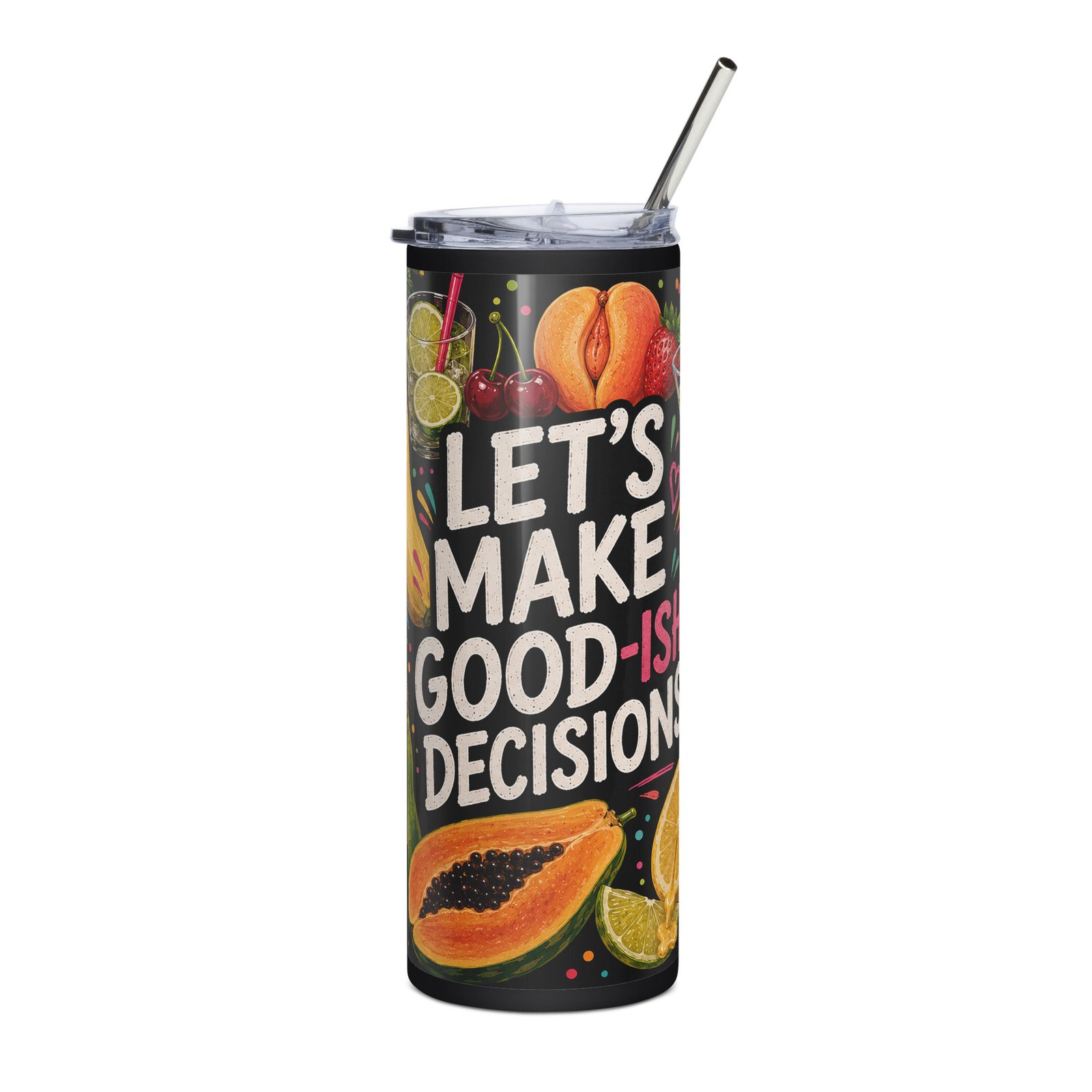
For your own outdoor entertaining setup, the “Let’s Make Good-ish Decisions” 20oz insulated stainless steel tumbler includes a lid and straw and is designed for pool days, boat days, and other questionable-but-optimistic plans. It is not a substitute for your dog’s water bowl. It is simply a more entertaining way to keep your own drink contained while your dog judges your choices.
Know When Your Dog Is Done
Your dog may not announce, “I have reached my social limit and would like the check.” You have to watch for the signs.
Stress or overstimulation can look like:
- Persistent whining or barking
- Pacing or pulling
- Inability to lie down and relax
- Repeated yawning or lip-licking
- Turning away or avoiding eye contact
- Tucked tail or lowered body
- Hiding beneath furniture or behind you
- Sudden growling, snapping, or lunging
- Frantic attention toward every person, dog, sound, or dropped crumb
Heat-related warning signs include heavy continuous panting, excessive drooling, weakness, wobbling, confusion, or abnormal gum color. If your dog seems overheated or disoriented, move them to a cool place immediately and contact a veterinarian for guidance.

When your dog is done, leave. Do not order another round to see whether they “settle down.” Do not wait for the check while your dog spirals into a one-animal protest march. Ask for the bill, move to shade, offer water, and get home or somewhere cool.
Leaving at the first clear signs of discomfort teaches your dog that you will listen. It also preserves your reputation as the person whose dog did not turn a relaxing patio into a documentary about poor decisions.
The Pups-and-Pitchers Checklist
Before you head out, confirm:
- Dogs are allowed on the patio.
- You understand the venue’s rules and local regulations.
- Your dog has exercised and gone to the bathroom.
- You packed fresh water and a portable bowl.
- You have shade, a mat or towel, treats, a leash, and waste bags.
- Your dog can settle calmly around people and other animals.
- The patio has space, shade, and an easy exit.
- Your dog stays off furniture and away from food-service areas.
- You are prepared to leave if your dog becomes stressed or overheated.
A great dog-friendly patio visit is not about keeping your dog beside you for the maximum possible number of patio drinks. It is about choosing the right setting, bringing the right supplies, respecting the space, and leaving while everybody is still having a good time.
Because the best outdoor entertaining ideas include sunshine, good people, a cold drink, and a dog who goes home thinking, “Honestly? I’d do that again.”
Sources and Further Reading
- National Restaurant Association: Pups on Patios
- BC SPCA: Taking Your Dog to a Patio
- DayDrinkingHQ.com
- DayDrinking HQ Shop





One Response