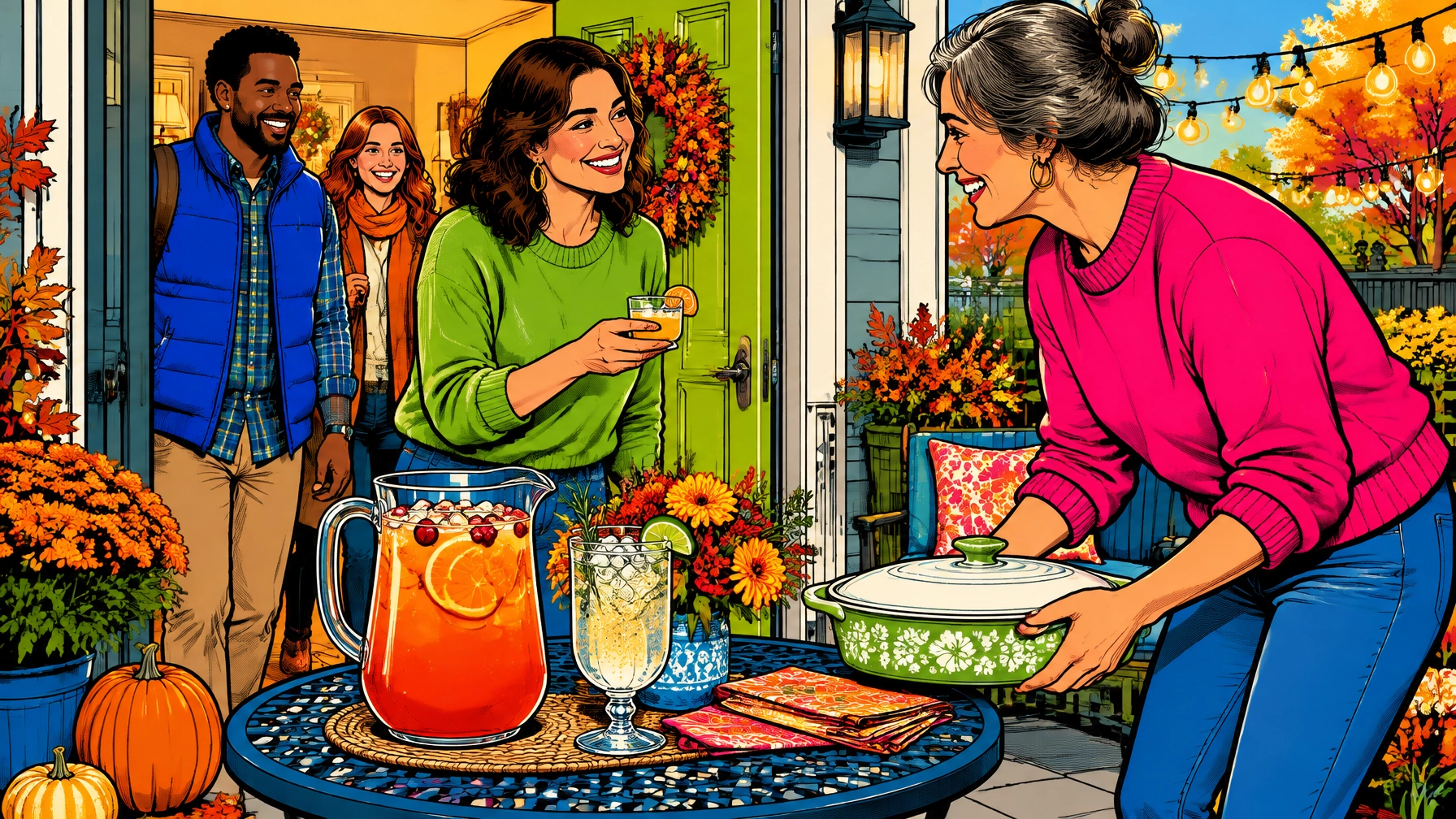


Friendsgiving round two should feel like a party, not Thanksgiving: The Sequel, now with more dishes and less patience. Assign guests the food, repurpose leftovers into a self-serve spread, batch drinks ahead, and set up the patio to look deliberate. Here’s a low-effort plan for hosting again without cooking again.
Reading Time: 7 minutes
The turkey has already done its shift. It is not coming in for overtime.
Category: Seasonal
One Friendsgiving is a feast. Two, three or four in the same month is a scheduling challenge with side dishes. Hosting the second one doesn’t require another full menu, an ambitious trip to the grocery store, or you wearing an apron like a hostage negotiator. Make this gathering a potluck, let leftovers do the heavy lifting, and put your effort into a comfortable place to hang out.
This is a different job from planning a first Friendsgiving: you’re not producing the whole meal. You’re setting up a relaxed backyard entertaining session, organizing what people bring, and making the food and drinks easy to serve.
Give Everyone a Job, and Give Yourself One Dish, Max
“Bring whatever” sounds laid-back until five people arrive with pie and nobody brings serving spoons. Assign categories instead. Ask guests to claim one item they already have or one easy appetizer for parties; make it clear that nobody needs to cook a fresh dish.
Try a simple split:
- You: One main dish, such as turkey sliders, or a prepared grazing board.
- Guest one: Rolls, sandwich bread or tortillas.
- Guest two: A vegetable side or salad.
- Guest three: A dessert, sliced and ready to serve.
- Guest four: Ice, sparkling water and nonalcoholic drinks.
- Other guests: A leftover side, condiment, or something useful for the table.
Tell guests to bring leftovers chilled and labeled, with a note if the dish needs reheating. If they no longer have Thanksgiving leftovers, a store-bought side or a bag of rolls is a perfectly respectable contribution. This is a party, not an audition for a cooking competition with suspiciously high stakes.
Ask one person to bring containers for take-home portions, too. The host who has a stack of lidded containers at the end of the night looks prepared. The host who tries to wrap cranberry sauce in a paper napkin looks like the season got away from them.
Build a Leftovers Bar, Not a Second Thanksgiving Buffet
Put the food out as components guests can combine themselves. That keeps the menu flexible and means you aren’t assembling individual plates while trying to remember where you set your drink.

A simple station can include:
- Turkey sandwich bar: Rolls or sturdy bread, sliced turkey, cranberry sauce, mustard, greens and pickles.
- Mashed-potato station: Mashed potatoes, gravy, chopped herbs and any leftover roasted vegetables. Warm the potatoes and gravy in small batches.
- Stuffing and sides: Serve stuffing in a shallow dish, with a serving spoon that isn’t already missing.
- Cranberry extras: Put cranberry sauce beside the sandwiches, or spoon a little onto crackers with cheese.
- Dessert: Cut pies or cakes into smaller pieces so guests can sample without committing to an architectural slice.
One freshly purchased item (like greens, rolls or a tub of dip) can make the spread feel refreshed without turning your kitchen into a production line. Keep the menu recognizable; the point is to give leftovers a new arrangement, not make guests solve a culinary puzzle.
Batch Drinks Without Taking Over the Kitchen
A self-serve drink station lets you be a host instead of the evening’s full-time bartender. Choose one batch cocktail, put out water and a zero-proof option, then let guests handle their own glassware and garnishes.
Apple Cider Punch
For about eight servings:
- 4 cups apple cider
- 2 cups ginger beer
- 1 cup bourbon
- ½ cup fresh lemon juice
- Thin apple and lemon slices
- Build: Combine the cider, bourbon and lemon juice in a pitcher and chill. Add ginger beer just before serving, then pour over ice with the fruit.
Cranberry Margarita
For about eight servings:
- 2 cups tequila
- 1 cup orange liqueur
- 1½ cups cranberry juice
- ¾ cup fresh lime juice
- Lime wedges for serving
- Build: Combine the tequila, orange liqueur, cranberry juice and lime juice in a pitcher; chill until serving. Pour over ice and garnish with lime.
Sangria
For about eight servings:
- 1 bottle red wine
- ½ cup brandy
- 1 orange, thinly sliced
- 1 apple, chopped
- 1 cup sparkling water
- Build: Stir the wine and brandy together with the fruit. Chill if time allows, then add sparkling water just before serving.
The sangria takes about five minutes to assemble; chilling it longer lets the fruit flavor the wine. If you’re short on time, skip the extra garnish production. Citrus wedges in a bowl look festive and require almost no negotiation with a cutting board.
For canned cocktails, keep the cans cold and offer citrus wedges, ice and sparkling water alongside them. Guests can pour a can over ice or top it with a splash of bubbles. No elaborate “upgrade station” required; a cold drink and a clean glass are already an upgrade from standing in someone’s kitchen holding a warm can.
Set out water where it’s easy to see, and keep the nonalcoholic option on the same station as the cocktails. That’s good hosting and fewer trips through a crowded kitchen.
How to Build It
The trick is to prepare the room, not another feast.
The day before: Confirm who’s bringing what, clear a shelf in the refrigerator for incoming dishes, chill drinks, and set out serving platters and utensils. Put labels and a marker near the food station for ingredients and reheating notes.
A couple of hours before guests arrive: Arrange the patio or dining area, set up the drinks, and put out shelf-stable snacks. Leave perishable food refrigerated until it’s time to serve. If the weather is pleasant, make the patio the main hangout and keep an indoor backup ready for anyone who’d rather not socialize with a cold chair.
When guests arrive: Direct dishes to the right spot and get the first drinks poured. Reheat only the food you expect people to eat soon, rather than warming the entire supply at once.
As the gathering winds down: Offer containers, pack food safely, and clear the serving table. Do not start a complicated cleanup project while everyone is still there. A stack of dishes can wait; your friends are already doing a perfectly good job discussing whether pie counts as a side.
For food safety, refrigerate perishable leftovers within two hours, or within one hour if the temperature is above 90°F. Keep cold food at 40°F or below, hot food at 140°F or above, and reheat leftovers to 165°F. Refrigerated leftovers are generally best used within three to four days. Follow the USDA’s leftover safety guidance, and don’t serve food that sat out too long at the first gathering. A second party is not a food-safety reset button.

Secret Sauce
Make the setup look intentional by grouping things into zones: food, drinks and lounging. A tablecloth or runner can make mismatched serving dishes look like a choice. Put cloth napkins in a basket, stack plates where guests can reach them, and keep a trash and recycling bin in plain sight. Mystery bins are for office kitchens, not holiday entertaining.
If the weather cooperates, use the patio for drinks and conversation, with the food station somewhere easy to reach. Add a few blankets and switch on outdoor lights as daylight fades. You don’t need a themed tablescape that took three weekends and a glue gun; a clear surface, decent lighting and somewhere comfortable to sit will carry the evening.
For a first-event plan, with a fuller menu and a more structured afternoon, see The Friendsgiving Daytime Blueprint. Round two has a different assignment: fewer dishes, more conversation, and no fresh turkey required.
The Two-Friendsgiving Pacing Plan
If you’re attending one Friendsgiving and hosting another, treat them as separate gatherings, not one continuous buffet with a change of address. Eat before you arrive, drink water between cocktails, and don’t feel obligated to accept every refill or take-home container. The goal is to enjoy both events, not become the person explaining the punch bowl to a houseplant.
Keep the second gathering shorter and lighter on logistics. Delegate the food, make the drinks self-serve, and let guests help with small tasks like setting out plates. Most importantly, sit down and eat something yourself. A host who spends the entire party in the kitchen has technically thrown an event, but missed most of it.
Friendsgiving round two is at its best when it feels easy: familiar food, a few thoughtful touches, a good place to gather, and a host who isn’t cooking while everyone else is having fun. The leftovers are already here. Put them to work.