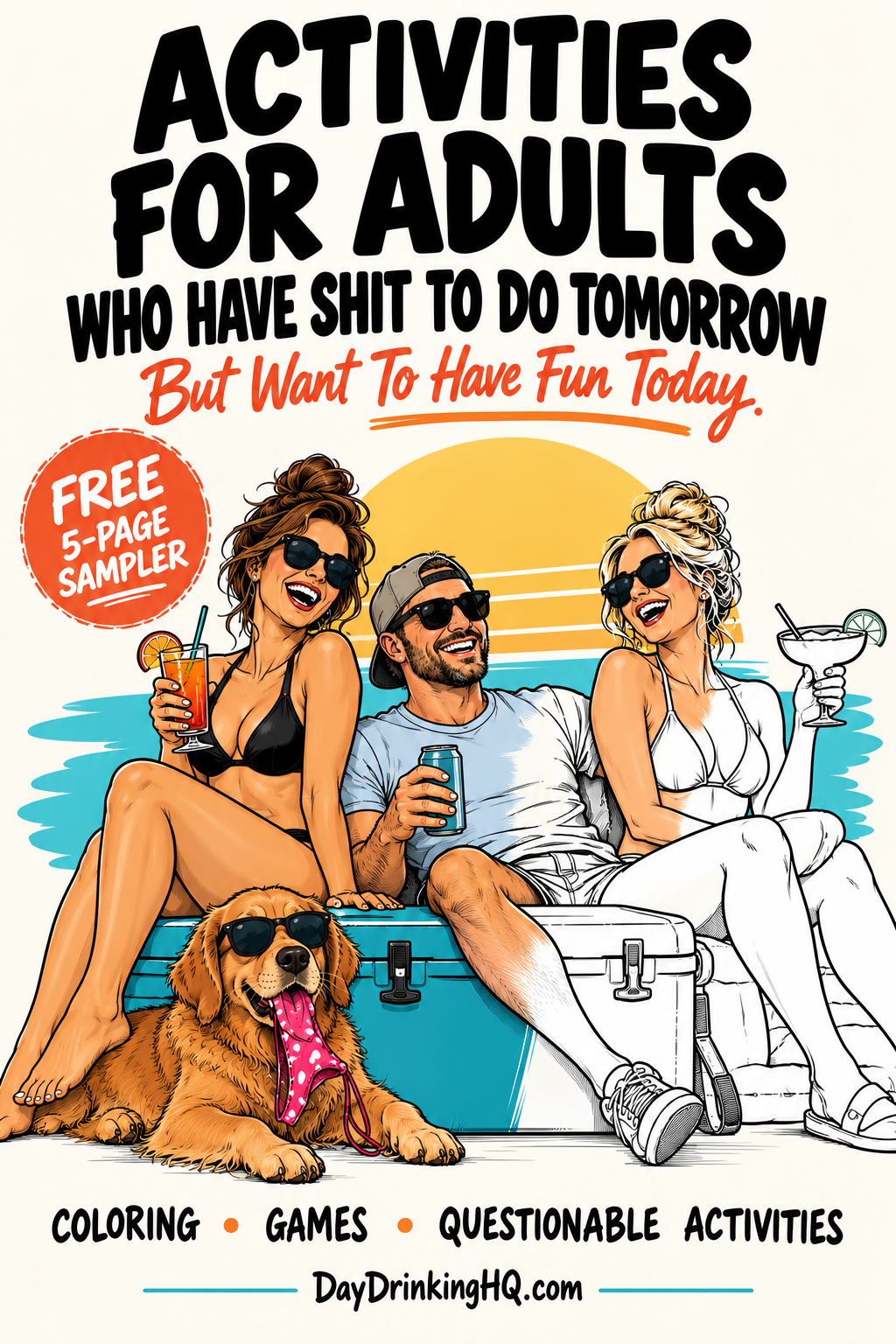


Planning a full day of daytime drinking is less about heroic volume and more about timing: eat before the first pour, alternate water and alcohol, use low-ABV or non-alcoholic drinks at the afternoon dip, and finish with dinner. This schedule keeps the patio fun, energy steadier, and tomorrow less theatrical.
**Reading Time: 7 minutes **
The goal is not to win a drinking contest nobody organized.
The Day-Drinking Schedule That Doesn’t Fall Apart at 3 PM
A full social day works better when you treat it like a loose itinerary rather than a hostage situation involving bottomless mimosas.
The basic structure:
- Eat a real meal before the first alcoholic drink.
- Start with one measured, standard drink or a low-ABV option.
- Put food between drinking windows.
- Switch to low-ABV or non-alcoholic drinks when your energy dips.
- Finish alcohol several hours before bed.
- End with dinner, not a desperate handful of chips found in a glove compartment.
This is not a prescription to drink all day. Alcohol affects people differently, and some people should not drink at all, including anyone who is pregnant, taking certain medications, operating a vehicle, or managing a health condition affected by alcohol.
For everyone else, the schedule below is about pacing and decision-making, not seeing how many beverages can be technically described as “brunch.”
11:00 AM: Eat Before the First Pour
The first drink should not be the opening act for an empty stomach.
Aim for a meal with protein, fiber, carbohydrates, and some fat about 30 to 90 minutes before drinking. That could mean eggs with whole-grain toast and avocado, Greek yogurt with fruit and nuts, a breakfast sandwich, or grilled chicken with rice and vegetables if your schedule has already become suspiciously lunch-forward.
The point is to give your body actual fuel before alcohol enters the group chat.
A pastry and coffee may be emotionally supportive, but they are not a complete strategy. Sugary, carb-heavy food can leave you feeling briefly brilliant and then mysteriously useless once the natural afternoon energy dip arrives.
Drink water with the meal. Not because water magically cancels alcohol (it does not) but because starting hydrated is considerably less foolish than trying to negotiate with dehydration three cocktails later.
Noon: Make the First Drink Deliberate
At noon, choose something you can sip rather than something that arrives in a glass shaped like a novelty weapon.
A light beer, wine spritz, shandy, or spirit-forward drink diluted with soda water can work well. If you choose a cocktail, pay attention to the pour. A large restaurant cocktail may contain more than one standard drink even if it arrives wearing a single tiny umbrella.
According to the National Institute on Alcohol Abuse and Alcoholism, one U.S. standard drink contains about 14 grams of pure alcohol. That is roughly:
- 12 ounces of beer at 5% ABV
- 5 ounces of wine at 12% ABV
- 1.5 ounces of distilled spirits at 40% ABV
Those numbers describe alcohol content, not the size of the glass, which is how a charming patio pour can quietly become an accounting problem.
Sip slowly. Keep water nearby. If you are driving, the correct number of alcoholic drinks is zero. Arrange a ride before the patio starts looking like a very persuasive real-estate opportunity.
1:00 PM: Pair the Drink With Food
The best day drinking food pairings are not merely delicious. They also keep the afternoon from turning into a low-budget medical drama.
Pair drinks with food that brings more than salt and crunch:
- Beer or cider: grilled chicken, tacos with beans, hummus, or a substantial sandwich
- Wine or a spritz: cheese, nuts, olives, vegetables, seafood, or a grain salad
- A cocktail: avocado, eggs, lean protein, rice, roasted vegetables, or a burger with something green nearby for legal purposes
- Spicy drinks: cooling foods such as yogurt, cucumber, cheese, or avocado
Chips and pretzels are not banned. They are simply not allowed to be the entire meal while everyone pretends the salsa counts as a vegetable serving.
A balanced lunch around the first or second drink gives you a better chance of staying steady through the afternoon. It also makes the next menu decision less likely to be “whatever can be eaten with one hand while lying horizontally.”

2:00 PM: Slow the Rotation
This is where the day should shift from “drinks are happening” to “we are enjoying a social experience that happens to include drinks.”
A useful rhythm is to give each alcoholic drink plenty of time, then follow it with water or a non-alcoholic option. One standard drink per hour is sometimes used as a pacing rule, but it is not a guarantee of safety, sobriety, or a particular blood alcohol level. Body size, sex, food, medications, fatigue, and drinking speed all matter.
Also remember that the CDC’s moderate drinking guidance is much lower than many people assume: up to two drinks in a day for men and one drink in a day for women, on days alcohol is consumed. Those are daily limits, not a challenge to stack beverages into a patio pitcher.
If the group orders another round, you do not have to match it. A sparkling water with lime is still a beverage. It still occupies a glass. It still gives you something to hold while you listen to someone explain their fantasy football strategy with the confidence of a Supreme Court justice.
2:30–3:30 PM: Handle the Slump Like a Professional
The 3 PM slump is real. Your body naturally tends to experience an energy dip in the early-to-mid afternoon, and alcohol can make that sleepy feeling louder.
So can:
- A heavy lunch
- Too little water
- Heat and direct sun
- Poor sleep
- A rapidly rising and falling blood sugar level
- The seventh consecutive conversation about someone’s home renovation
This is the moment to pause alcohol and eat a snack with protein, fiber, or fat. Good choices include:
- Fruit with nuts
- Hummus with vegetables
- Cheese with whole-grain crackers
- Greek yogurt with berries
- A small turkey, chicken, or tuna sandwich
- Edamame or roasted chickpeas
Then change the physical setting. Move into shade, take a relaxed walk, sit somewhere with airflow, or switch from a noisy bar rail to a proper table. You are not failing at day drinking because you need to sit down. You are demonstrating advanced chair awareness.
Most importantly, make this your first low-ABV or non-alcoholic window. Choose an NA beer, sparkling water, iced tea, a zero-proof spritz, or a soda with citrus. The social ritual continues while the alcohol total stops climbing like it has somewhere important to be.

4:00 PM: Choose Your Landing Gear
If you feel tired, dizzy, nauseated, unusually warm, confused, or unsteady, stop drinking alcohol. Switch to water, eat if you can, get somewhere cool, and ask someone you trust to stay with you. Severe confusion, trouble breathing, seizures, repeated vomiting, inability to wake someone, or blue or pale skin can signal an emergency. Call emergency services.
If you feel fine and continue socializing, this is the time for restraint, not a dramatic comeback.
A low-ABV drink may fit here, but a non-alcoholic option is often the smarter move. Think of it as landing the plane while the runway is still visible.
Avoid using caffeine as a rescue mission. Coffee may make you feel more alert, but it does not reverse impairment. Energy drinks mixed with alcohol are especially bad at disguising how tired or impaired you actually are.
And no, peptides are not a loophole. Peptide products do not make alcohol safe, erase impairment, or replace food, water, sleep, or medical advice. If you use or are considering any peptide therapy, discuss alcohol use with a qualified clinician.
5:00 PM: Finish With Dinner
The best way to end a daytime drinking session is with a proper meal and a clear stopping point.
Choose protein, complex carbohydrates, vegetables, and water. Salmon with rice and vegetables, a chicken bowl, a hearty grain salad, tacos with beans and protein, or a normal dinner that did not arrive in a basket all work.
You do not need a miracle meal. You need food that feels like food.
Stop alcohol several hours before bed when possible. Water can help with dehydration, but it cannot lower your blood alcohol concentration or speed up the liver. Only time does that.
The target is to arrive at dinner still capable of reading a menu without it becoming a high-stakes puzzle.
The One Piece of Gear That Actually Helps
DayDrinking HQ’s “Hydrate Then Intoxicate” 20oz Insulated Tumbler costs $27.49 and has a practical job: keep a cold water option in rotation instead of letting hydration become an abstract concept you vaguely remember from a wellness podcast.
It is made from stainless steel, uses double-wall vacuum insulation, has a spill-resistant lid, fits a cup holder, and is dishwasher-safe. The printed “hydrate, then intoxicate” sequence is funny, but the useful part is the physical reminder to finish water before reaching for another drink.
It does not monitor alcohol, lower BAC, or grant diplomatic immunity at brunch. It simply makes the better choice harder to forget.
The Simple Version
If you remember nothing else, use this structure:
- Before noon: Eat a balanced meal and drink water.
- Noon: Start with one measured drink or a low-ABV option.
- 1 PM: Eat real food, not just garnish.
- 2 PM: Slow the pace and alternate water.
- 3 PM: Expect the slump; snack, get shade, and switch to NA or low-ABV.
- 4 PM: Decide whether you are enjoying the day or negotiating with it.
- 5 PM: Stop alcohol, eat dinner, and land the plane.
Day drinking wellness is not about pretending alcohol is a health food. It is about building a day that includes good food, fresh air, conversation, and enough restraint to remember why everyone was laughing in the first place.
Because the patio deserves a graceful exit, not a season finale.
Category: Wellness